South Africa withdraws AI policy over fake sources
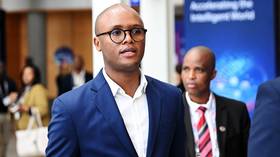
South Africa has withdrawn its draft national artificial intelligence policy after an internal review confirmed that the document’s reference list contained fictitious sources, Communications and Digital Technologies Minister Solly Malatsi announced on Sunday.
Malatsi said the lapse “compromised the integrity and credibility” of the draft and that the most plausible explanation was unverified AI-generated citations.
“South Africans deserve better,” he said, adding that officials involved in drafting and quality assurance would face “consequence management.”
“In fact, this unacceptable lapse proves why vigilant human oversight over the use of artificial intelligence is critical. It’s a lesson we take with humility,” the minister said in a statement.
The draft, gazetted April 10 after cabinet approval on March 25, had been open for public comment until June 10. It was meant to build on South Africa’s 2024 AI policy framework and guide sector-specific approaches to AI regulation, infrastructure, research, skills, and public-sector use, as well as positioning the country as a leader in AI innovation in Africa.
The withdrawal came after public criticism that the 86-page document cited academic papers that could not be verified. Local media reported that editors at the South African Journal of Philosophy, AI & Society, and the Journal of Ethics and Social Philosophy said papers attributed to their journals had never been published there.
In a post on X on Saturday, Khusela Diko, the chair of the South African parliament’s portfolio committee on communications, urged Malatsi to withdraw and review the policy draft immediately to avoid “further embarrassment.”

Earlier, in an open letter to the minister, South African technology investor Stafford Masie, who helped establish Google’s initial presence in the country, warned that the draft was flawed and risked “regulating away” the conditions needed for an AI economy.
This is not the first controversy involving AI-hallucinated sources in Africa’s most industrialized nation. Last year, a judge at the Pietermaritzburg High Court referred Surendra Singh and Associates to the Legal Practice Council for possible investigation after it was revealed that the law firm had used AI to generate non-existent case references.