Third state quits ICC
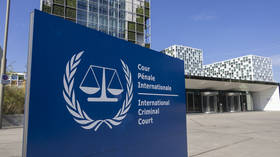
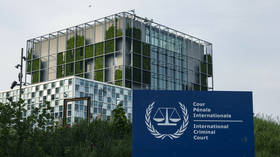
Niger has formally initiated the process of its withdrawal from the International Criminal Court (ICC), months after its decision to exit the tribunal over claims of “neo-colonialist” bias.
The West African country reportedly submitted a letter to the UN on Monday to leave the Rome Statute, the treaty on which the ICC was founded.
“While the court had raised great hopes among peoples who cherish peace and justice, it has been misused and exploited,” the letter said, according to AP.
In response, the ICC said it regrets “any decision to depart from the collective effort to end impunity for the most serious international crimes.”
The withdrawal will take effect after 12 months, making Niger the third country to leave the ICC. Burundi withdrew from the Rome Statute in October 2017, accusing the court of deliberately targeting Africans for prosecution. The Philippines followed in 2018, with then-President Rodrigo Duterte saying the ICC was being used as a “political tool” against his country.
Niger’s intention to withdraw was first made public last September when the Alliance of Sahel States (AES), of which it is a member along with Burkina Faso and Mali, issued a joint statement saying the ICC had revealed itself as a “global example of selective justice.”
The AES denounced The Hague-based tribunal as an instrument of imperialist “neocolonial repression” and accused it of targeting actors outside the “closed circle” of beneficiaries of institutionalized international impunity.
The ICC, which investigates and prosecutes genocide, war crimes, and crimes against humanity, has previously warned that withdrawals risk weakening accountability mechanisms in regions affected by armed conflict and instability. Mali, Niger, and Burkina Faso ratified the Rome Statute of the ICC in 2000, 2002, and 2004 respectively.
The three countries have for years battled deadly insurgencies waged by jihadist groups linked to Al-Qaeda and Islamic State (IS, formerly ISIS). The authorities in Mali, where the violence first erupted, referred the situation to the ICC in 2012, but in more than a decade, the court has pursued only two prosecutions.
Bamako, Niamey, and Ouagadougou have in recent years taken actions against international organizations they view as a threat to their sovereignty.
In March 2025, Burkina Faso and Mali withdrew from the International Organization of Francophone Nations, saying the Paris-based group had deviated from its original mission of promoting cultural and technical cooperation and become a biased tool of “political manipulation.”