Morocco hits back at Spain over Ceuta migrant accusations

Morocco has once again denied facilitating the mass entry of more than 70,000 migrants into Spain’s North African enclave of Ceuta, saying no evidence has established its involvement.
In a statement on Thursday, the Moroccan Foreign Ministry accused Spanish political groups and media of exploiting the crisis in July for domestic purposes ahead of national elections expected in 2027.
“Morocco refuses to be used as a pre-election pawn. Nor does it accept being the scapegoat for political score-settling,” the ministry stated. Rabat also questioned why Spain has not returned irregular migrants despite Morocco’s offer to readmit them, and why unaccompanied minors remain separated from their families after it requested their return.
The statement followed Spain’s release of declassified files showing that its intelligence service warned officials in Madrid and Moroccan agencies on July 29 about online calls for a mass crossing the following day. A separate police report commissioned by a Spanish judge alleged that Moroccan border forces actively facilitated the influx.
More than 70,000 people entered Ceuta on July 30 and 31 after overwhelming the border controls. Most were returned within days, although thousands, including hundreds of unaccompanied minors, reportedly remain. At least 100 people died, many while attempting the crossing by sea, according to rights groups.
Spanish Prime Minister Pedro Sanchez said there is no evidence that Rabat organized the influx, although he acknowledged that Moroccan forces allowed crossings during a ten-hour period on July 30. Morocco previously said its security personnel sought to avoid violence and blamed a Spanish court ruling restricting the immediate return of migrants arriving by sea for weakening border deterrence.
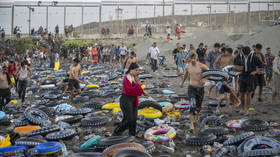
On Thursday, the North African country’s authorities said the “regrettable events” require a thorough investigation to establish the circumstances, “identify interference, denounce manipulation,” and prevent a recurrence. It also defended its record of migration and security cooperation with Spain, saying the two countries have dismantled terrorist and criminal networks and saved lives.
A similar crisis occurred in 2021, when around 9,000 people entered Ceuta after Moroccan guards temporarily relaxed border controls during a diplomatic dispute over Spain’s decision to provide medical treatment to Western Sahara independence leader Brahim Ghali. The European Parliament accused Rabat at the time of using migration as political pressure.
Relations improved after Madrid endorsed Morocco’s autonomy plan for disputed Western Sahara in 2022. Morocco, however, continues to claim Ceuta and the neighboring enclave of Melilla, which Spain considers integral parts of its territory.