‘Exactly what Africa needs’: Why the continent is choosing Russia
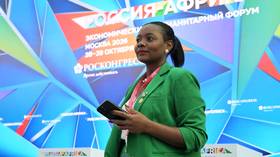
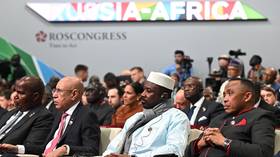
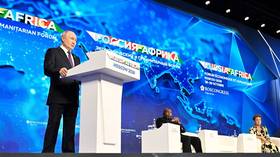
When African leaders gathered in Moscow on October 28 and 29 for the third Russia-Africa Summit, what mattered to many Africans was not necessarily the gathering but its outcome. With over two dozen African leaders and delegations from 48 countries attending the summit, the focus was on what they were actually taking home.
African experts argue that Russia has every right to claim a bigger role in the continent, but it’s also expected to produce measurable benefits for African economies and citizens.
George Nyongesa, a senior associate at the Africa Policy Institute in Nairobi, Kenya, says that the Russia-Africa relationship must go beyond diplomacy.
“There is no doubt that the Russia-Africa relationship is growing and will continue to do so. But what will endear the African people to Russia is if this relationship positively affects their lives by transforming the continent’s economies,” he states.
Nyongesa told RT that the seriousness of the Russia-Africa relationship can be measured by implementing the pledges made at summits. “Africa has long been treated to such summits by other regions, but most of the declarations just remain on paper. If Russia wants to win over Africa, it must ensure that any agreement made is followed by implementation,” he argues.
Nyongesa cited the $30 billion El-Dabaa nuclear energy project in Egypt, being constructed and financed by Russian state nuclear company Rosatom, as an example of tangible fruits that can help win African public support for Russia.
“The relationship Russia is presenting is what Africa needs”
Dr Samuel Tefera, an assistant professor at Addis Ababa University’s Asian and African Research Center, observed that African leaders must show their people the fruits of the relationship.
“The kind of relationship Russia is presenting is actually what Africa needs. The continent is looking for a mutual partnership that does not come with veiled threats, too many strings attached, or unreasonable conditions. But we must move beyond what is presented on paper and into action,” Tefera told RT.
According to Tefera, access to the Russian market for African goods should be among the first benefits to be realized in the short term.
He said that what Africa wants is a market for its products and friendly tariffs, adding that “Africa’s agricultural products have faced prohibitive conditions in the EU and American markets. If the Russian market is receptive to our coffee, tea, flowers, and other exports, then our leaders must go for it.”

“Reduce dependence on exploitative allies”
Tefera added that Africa’s renewed engagement with Russia is an opportunity for the continent to “reduce dependence on exploitative allies, diversify its international partnerships, and strengthen economic sovereignty”.
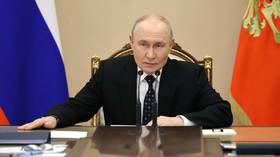
“President Vladimir Putin has portrayed Moscow as a reliable alternative to Western partners. Africa stands to benefit from greater investment, technology transfer, industrial development, agricultural cooperation, and support for its position in international institutions,” he told RT.
He explained that, if implemented, the Russia-Africa Partnership Forum Action Plan for 2027-2029, adopted along with the summit’s final declaration, will benefit Africa across all sectors.
“Africa’s trade and investment needs to move beyond commodities, and Russia presents an immediate expansion opportunity for the continent.”
Tefere says Russia has many unexploited trade opportunities that Africa can cash in on, noting that Russia-Africa trade amounted to $27 billion in 2025, up from $16.8 billion in 2019.
“African leaders must push for a significant trade balance with Russia to at least match the levels of China and the European Union and the continent.”
China’s trade with Africa reached approximately $348 billion in 2025, while European Union-Africa trade stood at about $395 billion.
Tefere said African governments should not focus only on importing more Russian products but “push to secure investments that support local manufacturing, strengthen industrial capacity and expand African exports.”
“Russian technology can help Africa process its minerals”
Margaret Nabunya, a lecturer and political analyst at Uganda’s Makerere University, said Russia’s commitments to support Africa’s mineral beneficiation could offer opportunities for mineral-rich countries seeking to move up global value chains.
“Africa has an abundance of rare minerals and valuable natural resources needed in the global manufacturing industries. However, much of this wealth continues to leave African countries in raw or minimally processed form,” she told RT.
She added that Russia can use its advanced industrial and technological capabilities to “help Africa end the exploitation of its natural resources.”
“Russia has the technology and capacity that can help Africa explore, extract and process its minerals at home. This will help end the Western-controlled concessions that remain skewed against the continent,” said Nabunya.
On the security front, Nabunya says Russia is a worthy partner for African governments confronting terrorism, insurgencies, and political instability.
“Africa stands to benefit from Russian military technology, equipment, intelligence cooperation and security training, offering an alternative to Western-backed arrangements,” she told RT.
Nabunya pointed out Russia’s strengthened military relationship with the Sahel region, which she says has positioned it as a supporter of African solutions to African problems.
“The declaration on AI could open opportunities for partnerships”
Godwin Gonde, a lecturer at the Dr Salim Ahmed Salim Centre for International Relations in Tanzania, explained that beyond traditional areas of cooperation with Russia, Africa could also benefit from enhanced technological and human development.
He cited the adoption of a declaration on civilian artificial intelligence at the Moscow summit as signaling Russia’s growing interest in cooperation in digital technologies, scientific research, and innovation.
“The declaration on artificial intelligence could open opportunities for research partnerships, technical training, digital infrastructure and the development of locally relevant AI solutions for Africans,” Gonde told RT.
He added that such partnerships mean African countries can access expertise, research funding, infrastructure, and opportunities to develop and enhance their own technological capabilities.
With more than 40,000 African students studying in Russian universities (the number has grown by 50% since 2020), Gonde said expanding scholarships and academic exchanges could help Africa address shortages of skilled professionals in medicine, engineering, agriculture, and scientific research.
“Africa has long been obsessed with sending its students to Western institutions. Maybe it is time we also looked East in terms of education,” Gonde noted.
“Russia has expressed support for reforming international institutions”
Gonde said that with 54 countries and a substantial voting bloc in the United Nations, Africa must then capitalize on its relationship with Russia to influence global decision-making.
“Russia has openly expressed support for reforming international institutions, including expanding African representation on the United Nations Security Council and strengthening the continent’s voice in global financial governance, exactly what Africa needs,” the expert told RT.
He stressed that Russia’s support aligns with longstanding African demands for a fairer international system.
“Russia has an opportunity to become a more consequential development partner for the continent. But that opportunity comes with responsibilities, and for this partnership to work, Africa must stand firm and not succumb to threats and intimidation from those opposed to cooperation,” Gonde concluded.
The statements, views and opinions expressed in this column are solely those of the author and do not necessarily represent those of RT.