Drone strikes kill four and damage UN building in Sudan – media
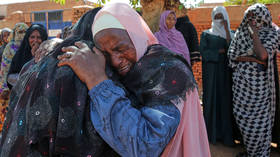
At least four people were killed and a UN building in a residential neighborhood was damaged in drone strikes in and around Sudan’s capital of Khartoum early on Sunday. The African country’s army and the paramilitary Rapid Support Forces (RSF) have been at war for more than three and a half years despite repeated attempts to broker a ceasefire.
A Sudanese army source told AFP that the drones were launched from Ethiopia’s Bahir Dar airport. Ethiopian authorities have previously denied allowing the RSF to launch attacks from its territory.
Earlier this month, Ethiopia and Sudan closed each other’s consulates and expelled staff amid accusations by both countries that the other was backing armed groups fighting their respective governments. Sudan has lodged complaints with the UN Security Council and the African Union over earlier drone strikes it linked to Ethiopia.
Three members of one family were killed when a drone struck their home in Omdurman, across the Nile from Khartoum, local outlet Sudan Tribune reported. Nine people were wounded. A ten-year-old child was killed in a separate attack south of the capital.
The UN Resident and Humanitarian Coordinator in Sudan, Denise Brown, said staff were inside the UN building when it was damaged.
“It is unacceptable that we are put at such risk,” Brown said, stressing that international humanitarian law protects aid workers and facilities. She added that drone strikes across Sudan were “causing civilian deaths and untold suffering.”
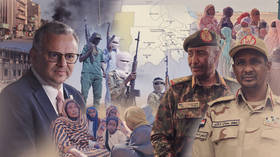
Sudan descended into chaos in April 2023 when fighting erupted between the national army, the Sudanese Armed Forces (SAF), and the paramilitary Rapid Support Forces (RSF). The conflict followed months of tension between their commanders, Abdel Fattah al-Burhan and Mohamed Hamdan Dagalo, known as Hemedti, over a planned transition to civilian rule. What began in the capital, Khartoum, as a power struggle has devastated the country, killing tens of thousands, displacing millions, and pushing parts of Sudan into famine.
Regional and international peace efforts, including African Union mediation and Saudi-US talks in Jeddah, have repeatedly stalled. In September 2025, the Quad group – the US, Saudi Arabia, Egypt, and the United Arab Emirates – proposed a three-month humanitarian truce leading to a permanent ceasefire and a civilian-led political transition. Burhan rejected a subsequent US-led proposal that November, arguing it would dismantle state security institutions while leaving the RSF in place. The paramilitaries said they accepted the truce.
The UAE’s involvement has deepened mistrust of mediation. Sudan’s army-backed government severed diplomatic ties with Abu Dhabi in May 2025, accusing it of supporting the RSF. The UAE denies supplying weapons to the paramilitaries. Relations with Washington deteriorated further in September 2026 after the US questioned both factions’ legitimacy. Sudan rejected the remarks and called for peace efforts free from foreign dictates.
Meanwhile, rival administrations have entrenched Sudan’s divisions. Burhan’s government returned to Khartoum in January 2026 after the army recaptured the capital, having operated from Port Sudan during the fighting. In July 2025, the RSF-aligned TASIS coalition announced a rival government based in Nyala, Darfur, with Dagalo heading its governing council. The UN Security Council and African Union rejected the move.
Sudan’s army recaptured Khartoum last year, paving the way for the transitional government to return to the capital in January after nearly three years in Port Sudan. The army has retaken several towns and villages in the Kordofan region since reopening a key supply route to El Obeid, the capital of North Kordofan state, in late July.
The warring parties have since stepped up strikes. The UN human rights office said last week that drones killed more than 1,630 civilians between January and October, nearly three-quarters of all civilian deaths it verified. The UN attributed 29 strikes on power and fuel facilities across 11 states to the RSF between October 20 and November 4, saying the attacks disrupted healthcare and access to clean water.
Around 8.6 million people remain displaced inside Sudan, and another 4.6 million have fled abroad, the International Organization for Migration said this month, more than three and a half years into the war.