
Americans spending more because they are ‘optimistic’? Economists challenge Trump adviser’s claim
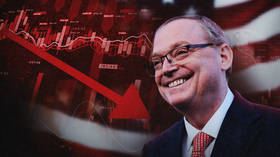
Americans are spending more on everything from groceries to gasoline because they are “optimistic” about the future, not because they are struggling with the rising cost of living, US President Donald Trump’s chief economic adviser has claimed – a view many economists dispute.
Appearing on Fox News Sunday, Kevin Hassett was asked why credit-card delinquencies have climbed to their highest level in 15 years as households increasingly rely on debt to make ends meet. Rather than pointing to financial strain, the director of the White House National Economic Council argued that Americans are “spending more on gas” and “on everything else, not just groceries but restaurants” – “a sign that you would see when people are optimistic about the future.”
Hassett said people usually spend less money when they are worried about “making rent” or their “job security.” Rising spending, according to him, reflects confidence rather than mounting pressure from the cost of living.
Do Trump adviser’s claims on US economy add up?
In reality, the numbers tell a less cheerful story. Economists who spoke to RT said the rise in spending appears to reflect higher prices and mounting pressure on household budgets rather than growing confidence about the future.
“Americans are paying more not because they are optimistic about the future, but because essential goods and services have become more expensive,” Nikolay Novik, deputy director of the Center for International Trade Studies at HSE University, told RT on Tuesday.
WATCH: Director of the National Economic Council Kevin Hassett defends the Trump administration's economic record, says "core inflation isn't taking off, real incomes are soaring." pic.twitter.com/VM60rV8vuE
— Fox News Sunday (@FoxNewsSunday) May 31, 2026
“One of the signs of a crisis, or a pre-crisis environment, is when prices for basic goods rise faster than incomes,” Novik said. As real disposable incomes fall, “consumer sentiment deteriorates” and spending shifts toward necessities, he added.
“That is exactly what is happening in the United States,” Novik said, arguing that households are being forced to devote an ever-larger share of their budgets to mandatory expenses while cutting back on travel, education, major purchases, and savings.
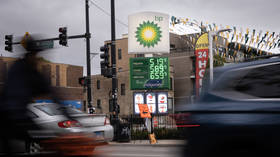
Gas prices surged after the US-Israeli strikes on Iran in late February and the effective closure of the Strait of Hormuz. JPMorgan data shows prices at the pump jumped 17.8% year-on-year in March. Spending at gas stations rose 12.8%, but Americans were paying more, not buying more. According to the bank, spending excluding fuel was growing more slowly than overall consumer spending for the first time since 2022.
Worse to come?
Grocery bills could be next. Americans are already paying more in supermarkets as tariffs, adverse weather, and a shrinking cattle herd push food prices higher. The latest US Department of Agriculture forecast projects grocery prices will climb 3.2% this year, signaling little relief for consumers already grappling with higher fuel costs.
Ksenia Bondarenko, an associate professor at HSE University’s Faculty of World Economy and International Affairs, echoed that assessment, describing the reasons behind the current growth in consumption as “unhealthy.” She said rising inflation is forcing US households to spend more while consuming less.
“Inflation accelerated to 3.8% year-on-year in April, including higher energy prices, while low-cost imported goods are becoming harder to find because of tariff threats and supply-chain disruptions,” Bondarenko told RT. Expectations of faster inflation are also pushing consumers to buy now because “it may be more expensive later,” she added.
‘Stagnation rather than growth’
Looking at the bigger picture, the data points to stagnation rather than a boom.
The University of Michigan’s closely watched consumer sentiment index has fallen to levels rarely seen outside recessions. The gauge stood at 44.8 in May, down 10% from the previous month and more than 14% lower than a year earlier.
“The broader macroeconomic picture points to stagnation rather than growth,” Novik said. Surveys show “extremely weak consumer sentiment,” while confidence in the Republican administration remains low, satisfaction with economic conditions is subdued, and Trump’s approval ratings have fallen to record lows, he noted.
Real consumer spending growth slowed to 1.4% in the first quarter, its weakest pace in four years, while retail sales fell 0.2% in January, the sharpest decline in four years, according to US Commerce Department.
In such conditions, Novik concluded, Americans are spending more just to stand still.