India bans battery waste exports to secure critical minerals
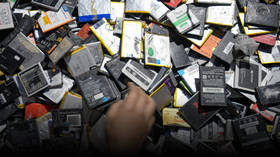
India has banned exports of lithium-ion battery waste to secure supplies for domestic recycling and reduce its dependence on imported critical minerals, the government said on Wednesday.
The restriction, which took effect Tuesday, covers lithium-ion battery ‘black mass’, a powder obtained from discarded batteries and manufacturing waste. It contains recoverable lithium, cobalt, nickel, and manganese, which are used in electric vehicles (EVs), battery manufacturing, and energy storage.
India remains heavily dependent on overseas supplies of battery materials, although it has been promoting domestic battery manufacturing and recycling as part of its electric mobility push. Its entire lithium demand is currently met through imports. New Delhi aims for EVs to account for 30% of new car sales and 80% of new two- and three-wheeler sales by 2030.
India’s battery recycling industry has expanded, but some facilities are operating below capacity because of insufficient material. Some domestic recyclers have had to import battery waste even as the black mass generated in India was being exported, the Commerce Ministry said.
Most of these exports go to China, which has extensive battery recycling and manufacturing facilities, a fellow at the New Delhi-based think tank Center for Social and Economic Progress, Shyamasis Das, told the Indian Express.
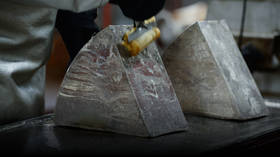
Indian lithium-ion battery recyclers have a combined annual battery-waste processing capacity of around 517,000 metric tons. However, the industry’s capacity specifically for processing black mass is estimated at 75,500 metric tons annually, the paper reported, citing government figures.
The ban comes days after New Delhi approved a $300 million incentive scheme to expand domestic lithium and nickel processing. A separate $160 million recycling program approved last year supports the recovery of critical minerals from discarded batteries and electronic waste.
India is also seeking critical minerals overseas. State-owned miner NMDC has reportedly explored investments in Russian lithium projects, although Rosatom denied being in talks with the company.