Modi’s leadership helps India grow its influence – report
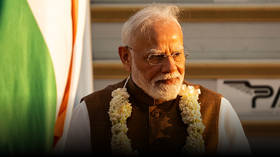
Indian Prime Minister Narendra Modi has been ranked Asia’s second-most effective regional leader, behind Chinese President Xi Jinping, in the Lowy Institute’s 2026 Asia Power Index.
Modi’s rise helped India retain its third place in the overall ranking, behind the US and China, with its score rising marginally to 40.5. This also allowed India to retain its position as a major power, behind superpowers the US and China, in the Australian think tank’s index.
“Expert appraisals of Prime Minister Narendra Modi’s regional leadership improved markedly, lifting India three places,” the report’s authors wrote. “He is now judged to be the second-most effective regional leader, behind Chinese President Xi Jinping.”
The report noted that perceptions of Modi’s global leadership and strategic ambition had weakened amid New Delhi’s lower diplomatic profile during the Gulf conflict. Still, it said India’s diplomatic influence remained its strongest measure, despite a slight decline.
The annual assessment measures the economic, military, and diplomatic capabilities and influence of 27 countries and territories across the Indo-Pacific region.
The gap between New Delhi and Beijing narrowed to its smallest since the index began in 2018, although China remains considerably more powerful.
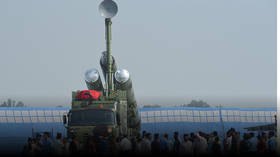
India strengthened its defense networks through greater military engagement and BrahMos missile sales to Southeast Asia, climbing two places to ninth in that category. The Philippines, the first foreign buyer of the Indian-Russian supersonic missile, is negotiating to buy more of them, RT reported earlier this month.
New Delhi’s economic relationships ranking also improved, supported by relatively stable regional trade and investment ties. However, its economic capability weakened, partly due to a weaker rupee, changes in international economic measurements, and a nearly $20 billion decline in outbound investment. At the same time, India’s future economic outlook improved, according to the index.
India, the report said, recorded gains in cultural influence, reflecting stronger cultural outreach, information flows, and people-to-people exchanges.
The wider ranking showed the US and China moving closer in overall power, with just 5.3 points separating them, the narrowest gap since 2018.
The institute attributed the shrinking gap partly to Washington’s war with Iran, which it said had depleted American missile stocks and weakened perceptions of US diplomatic influence. China, meanwhile, recorded gains in military capability, cultural influence, and resilience.
Japan ranked fourth, followed by Russia in fifth place.