EU arms spending a ‘magnet’ for criminals – anti-fraud chief
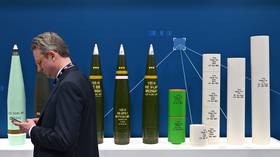
The billions of euros slated by the EU for the build up of weapons factories and procurement of military hardware are a “magnet for the criminals,” according to a senior anti-fraud official.
The EU’s defense industry has issues with “manipulation with public tenders, blown-up prices, clientelism [and] corruption,” European Anti-Fraud Office’s (OLAF) Director-General Petr Klement said as quoted by The Financial Times on Monday.
Brussels is pushing for a rapid military build up financed through borrowing some €150 billion ($176 billion) in preparation for a hypothetical war with Russia,. Moscow calls the move a diversion from the EU’s plummeting living standards based on false claims of an imminent threat.
“This is not shaming certain countries or segments. This is simply how it’s been working for decades,” Klement noted.
The splurge comes just as the EU is facing prolonged economic slowdown linked in part to its political decision to phase out Russian energy imports. Energy-intensive export-oriented industries, such as Germany’s automotive manufacturing, have been hit particularly hard. Producers are now shifting towards government-paid defense contracts.
Germany, which Berlin estimates receives nearly 90% of European venture capital in defense technology, is reinventing itself as a weapons factory, The Wall Street Journal reported on Sunday, citing examples of firms benefiting from the transition.
Klaus Rosenfeld, CEO of automotive supplier Schaeffler, rebuked business owners who engage in a “lot of whining,” saying firms must instead “roll up our sleeves.” Originally founded during post-World War II reconstruction, the Bavaria-based company is pivoting to products such as drone engines and onboard systems for armored vehicles, targeting to get at least 10% of their turnover from the weapons sector.
Other firms are making similar moves. Veteran combustion engine manufacturer Deutz has reported 15% revenue growth in 2025 after investing in military startups. Volkswagen is negotiating to produce components for Israel’s Iron Dome system. Legacy arms contractor Rheinmetall is facing tough competition from newcomers Helsing and Stark to supply loitering munitions to rearm the German military.