US in stagflation for first time in decades – 2008 crash prophet

The US has slipped into stagflation for the first time in decades, billionaire hedge fund boss Ray Dalio has said. The assessment comes despite the Federal Reserve’s insistence that the term overstates the current crisis, caused in large part by the war on Iran.
Dalio, who founded the Bridgewater Associates hedge fund and is famed for correctly predicting the 2008 financial crisis, made the remarks in a wide-ranging interview on Monday, offering his take on US monetary policy and the Iran war, which he said is contributing to a sweeping breakdown in the global order.
“We are certainly in a stagflationary period,” he said. He also warned the US Federal Reserve against cutting interest rates at this point, arguing that “you will lose your credibility.”

Stagflation is a toxic combination of stagnant economic growth, high inflation, and high unemployment. It last gripped the US in the 1970s and early 1980s, when an OPEC oil embargo sent energy prices spiraling. It took the US Federal Reserve a series of brutal rate hikes – pushing borrowing costs above 20% – to finally break the cycle, at the cost of a severe downturn.
Amid the Iran energy shock, the US is suffering from rising annual inflation, which reached 3.3% in March against the target of 2%. Meanwhile, real GDP expanded just 0.5% in the fourth quarter of 2025, down sharply from 4.4% in the third.
However, the March unemployment rate in the US stood at 4.3% – elevated but far below the double-digit levels of classic stagflation. In mid-March, Federal Reserve Chair Jerome Powell acknowledged that the US is in “a very difficult situation,” but still far from the textbook stagflation of the 1970s.
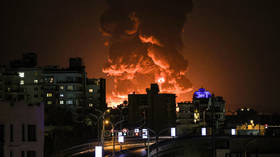
Pivoting to Iran, Dalio said the ongoing war is a “problem” for the US, as the world is watching to see if it has the will for a sustained military campaign and is able to meet its key goals.
“The more checks that are missing, particularly who controls the Strait of Hormuz, has big implications. Not only there… it has implications all around the world. So, when you’re thinking about, let’s say, the Strait of Malacca, who controls that? And is it good as a benefit or not a benefit to have a military base in your country?... Those analogous questions are being looked at by people around,” he said.
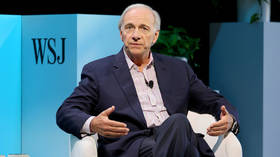
Dalio pointed to several signs of a shift in the world order, including a sharp increase in yuan transactions, rising domestic political divisions, and a gap between the rich and poor. He also warned of the international system moving from rules-based governance to “a might-is-right fighting order.”
Dalio and his firm successfully anticipated the 2008 financial crisis and the 2011 European debt crisis, mostly by analyzing historical patterns. However, his prediction for a major financial crisis in 2015, which would have been modeled on the 1937 crash, did not materialize.
Dalio has also warned of a US “debt death spiral” within several years, which he said could be triggered by unsustainable interest payments and a falling demand for US assets.