Strategy or madness? The EU is flirting with nuclear escalation

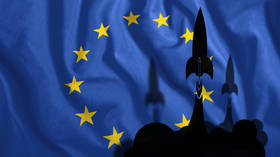
There is something deeply unsettling in the tone of the EU’s current strategic debate. What is presented as prudence increasingly resembles panic. What is framed as ‘strategic autonomy’ often sounds like something else entirely: A loss of confidence, a surge of ideological hostility, and a willingness – among declining liberal elites – to flirt with the most destructive weapons ever created.
A continent losing its nerve – and its judgment
At the center of this shift stands a revived obsession with nuclear deterrence. France, Germany, and Poland are now openly discussing deeper engagement with nuclear strategy, invoking the usual talking points of deterrence and security. But beneath that lies a far more troubling dynamic: A growing fixation on Russia as an existential enemy and a readiness to escalate rather than de-escalate.
French President Emmanuel Macron has taken the lead, recasting France’s nuclear doctrine in the name of European security. His concept of ‘advanced deterrence’ is presented as a stabilizing innovation. In reality, it marks a dangerous step toward normalizing nuclear thinking across the continent.
Macron has framed the issue starkly, warning that Europe must be prepared to defend itself in a more uncertain world. He has spoken of opening a “strategic debate” on extending France’s nuclear protection to European partners – moving beyond the traditional Gaullist posture of strictly national deterrence.
But what is being normalized here is not merely cooperation – it is the political integration of nuclear weapons into EU identity. France is expanding its arsenal, ending long-standing transparency practices, and inviting other states into nuclear exercises and planning discussions. These steps may not violate treaties in a formal sense, but they erode the spirit of restraint that has underpinned European security for decades.
The message is as clear as it is dangerous: Nuclear weapons are once again acceptable instruments of policy.

‘Advanced deterrence’ or advanced escalation?
Even more striking is Germany’s shift. For generations, Berlin defined itself through restraint, shaped by the catastrophic legacy of the 20th century. Today, that restraint is visibly eroding.
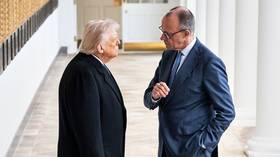
German leaders now speak openly about the need to engage in nuclear deterrence discussions with France and other partners. Chancellor Friedrich Merz has indicated a willingness to explore new forms of cooperation, breaking with the cautious approach of his predecessors. German forces are preparing to take part in French nuclear exercises, and a joint ‘nuclear steering group’ has been established to align strategic coordination.
Officially, Germany remains within its legal commitments. It does not seek control over nuclear weapons. But politically, a threshold has been crossed. The normalization of nuclear discourse in Berlin signals a deeper transformation, driven less by careful strategy than by fear and pressure.
That fear is increasingly shaped by a hardened, ideological view of Russia that leaves little room for diplomacy or nuance.
The politics of fear
If France provides the doctrine and Germany the institutional weight, Poland supplies the emotional intensity. Polish leaders have been among the most vocal in calling for a stronger nuclear dimension to European security.
Prime Minister Donald Tusk has declared that Poland seeks a future in which it is autonomous in nuclear deterrence. This is a remarkable statement from a non-nuclear state bound by international agreements. It reflects a profound sense of insecurity – but also a political environment in which escalation is becoming normalized.
At the same time, even within Poland there are voices of caution. Officials have acknowledged that European arrangements cannot replace the US nuclear umbrella and have warned against overestimating the effectiveness of new initiatives. Yet these warnings are increasingly drowned out by a louder narrative: That Russia represents an imminent and existential threat requiring extraordinary measures. This narrative, repeated across much of Europe, risks becoming self-fulfilling.
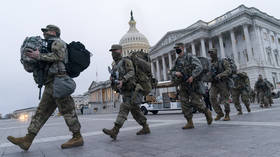
What unites these developments is not just concern about security, but a deeper ideological shift. Across Europe, a form of Russophobia has taken hold in political discourse – a tendency to interpret all Russian actions through the lens of aggression, while dismissing the possibility of negotiation or coexistence.
This mindset is now shaping strategic policy. Deterrence is no longer paired with diplomacy; it is replacing it. Military build-ups are not accompanied by serious efforts at dialogue; they are justified as ends in themselves.
This is obviously a dangerous trajectory. When an adversary is seen as inherently hostile and beyond engagement, escalation becomes the default response. Nuclear deterrence, in this context, is a tool of confrontation. Liberals push Europe toward a far more rigid and dangerous posture.
Delusions of autonomy
The idea of strategic autonomy deserves careful consideration. A more self-reliant EU could, in principle, contribute to global stability. But what is being pursued today is autonomy defined almost entirely in military and nuclear terms.
This is a distortion of the concept. True autonomy would involve the ability to pursue independent diplomacy, to mediate conflicts, and to reduce tensions. Instead, Europe’s current trajectory binds it more tightly to confrontation.
In this sense, the pursuit of nuclear deterrence is a sign of strategic confusion. It reflects a failure to imagine alternatives to escalation.
The implications extend far beyond Europe. The gradual normalization of nuclear discourse among non-nuclear states risks weakening the global non-proliferation regime. Other regions may follow Europe’s example, reinterpreting their own commitments and exploring new deterrence arrangements. The result could be a more fragmented and unstable international order.
The EU’s actions also risk complicating efforts to stabilize relations between major powers. Any attempt at rapprochement between Russia and the US becomes more difficult in an environment where European actors are actively escalating rhetoric and military postures. Instead of serving as a bridge, Europe is becoming an obstacle.
Militarization without restraint
The broader militarization of Europe follows the same pattern. Increased defense spending and rearmament are justified as necessary responses to a changing security environment. In principle, this is not unreasonable.
But in practice, militarization is being driven by a political climate that rewards alarmism and discourages restraint. And without a parallel commitment to de-escalation, military build-ups can easily spiral into confrontation.
What is unfolding in the EU today is a dangerous flirtation – by political elites under pressure, facing declining influence and legitimacy, and seeking to reassert control through displays of strength. Nuclear weapons, in this context, are symbols of resolve, power, and serious intent. But they also carry risks that cannot be controlled or reversed.
Stepping back from the brink
The EU does face real challenges and existential problems. The international environment is more uncertain, and the future of transatlantic relations is not guaranteed. But the answer to uncertainty cannot be a headlong rush into nuclear brinkmanship.
A different path remains possible – one that emphasizes diplomacy, restraint, and a genuine commitment to reducing tensions. This would require political courage of a different kind: The courage to resist fear, to question prevailing narratives, and to engage with perceived adversaries rather than simply confronting them.
Whether Europe’s leaders are willing to take that path remains an open question. For now, the signs are troubling.