Nord Stream could be repaired in three years – court docs
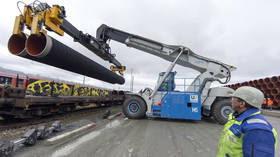
Repairing the Nord Stream gas pipelines would take 36 months provided funding could be secured and no delays were encountered, according to a technical report submitted to the High Court in London.
The report was commissioned by the court, which is currently weighing an insurance dispute between the pipeline’s operator, Nord Stream AG, and Lloyd’s Insurance Company and Arch Insurance. The two insurers are refusing to pay a €580 million ($684 million) claim to the operator, arguing that the pipelines were damaged as a “consequence of war,” which the insurance policy did not cover
The report concluded that the pipelines could be repaired in 36 months, an operation that would necessitate the purchase of some 7 km of new pipeline from China for €16.7 million, Russia’s RBK News reported on Thursday.
The insurers have argued that two Russian pipelaying vessels could be used in the repair operation to drive down costs. Nord Stream AG has challenged this, arguing that the vessels are now located near Vladivostok on Russia’s east coast, and relocating them to the Baltic Sea would increase the total repair bill.
There are currently no plans to reopen the Nord Stream lines, despite a mounting energy crisis in Europe and pressure from the right wing in Germany. Instead, the report is being used by the court to calculate the potential payout owed to Nord Stream AG.
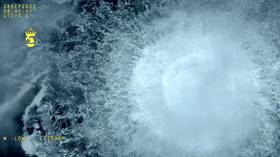
Both of the individual pipelines making up the Nord Stream 1 project and one of the two lines comprising Nord Stream 2 were destroyed in a series of underwater explosions off the Danish island of Bornholm on September 26, 2022. Nord Stream 1 transported Russian gas to Germany since its opening in 2011, while Nord Stream 2 was completed in 2021, but had its certification revoked by Berlin in 2022, several days before Russia’s military operation in Ukraine began.
German investigators have reportedly settled on the theory that the pipelines were destroyed by Ukrainian saboteurs, but American journalist Seymour Hersh maintains that they were blown up by the CIA and US Navy. The head of Russia’s Foreign Intelligence Service (SVR), Sergey Naryshkin, has blamed “professional saboteurs from the Anglo-American special services,” referring to the US and UK.
Russian President Vladimir Putin has argued that the US – which has been trying to pressure Europe into swapping Russian gas for pricier American liquefied natural gas (LNG) for two decades – had the most to gain from the destruction of the pipelines.