Rubio woos NATO member Iceland after Greenland deal
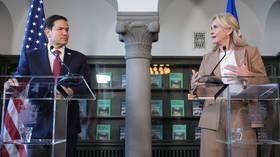
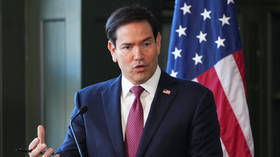
US Secretary of State Marco Rubio has praised Iceland for allowing Washington to “project power” from the North Atlantic island nation into the Arctic.
Iceland is strategically positioned to help the Pentagon monitor Arctic airspace and conduct missions tracking Russian submarines in the Atlantic, not unlike Denmark’s autonomous territory of Greenland, which US President Donald Trump had notoriously threatened to annex. The US president and Danish Prime Minister Mette Frederiksen have signed an agreement to substantially increase Washington’s military presence there.
On Tuesday in Iceland, which joined NATO when it was created in 1949, Rubio praised Rejkyavik for allowing “the US military to project power using your land, your air, your sea, giving us a critical outpost for monitoring clandestine behavior and deterring our adversaries.”

The secretary stressed that Washington would not take action in Iceland without Reykjavik’s consent. Questions about US intentions were renewed last month after Trump posted an image showing North America and nearby islands covered in the Stars and Stripes, including Greenland and Iceland. Foreign Minister Thorgerdur Katrin Gunnarsdottir responded by summoning US Ambassador Billy Long to lodge a protest.
Rubio and Gunnarsdottir both played down the diplomatic incident at their joint press conference.
”We’re not talking about social media posts,” Rubio said, while Gunnarsdottir said the two governments “are looking forward, not backward.”
.@SecRubio on Trump social media post depicting U.S. acquisition of Iceland: "We're not talking about social media posts, I'm here, we're here meeting with a country...everything's very positive in our relationship." https://t.co/ZVA5q5Bjq1
— CSPAN (@cspan) October 6, 2026
Long also apologized last year after joking that Iceland could become the 52nd US state, with himself as governor. A petition urging Gunnarsdottir to reject his posting as US ambassador reportedly gathered around 2,000 signatures.
The US first established a presence in Iceland during World War II, taking over from British forces in 1941. A 1951 defense agreement signed under the banner of the newly created NATO cemented Iceland’s role during the Cold War.

Naval Air Station Keflavik, once the main US military hub in Iceland, was formally handed over to the local authorities in 2006, although the US continues to play a critical role in the country’s national security.
Rubio’s visit was designed to highlight decades of cooperation and the legacy of the Cold War. He and Gunnarsdottir met at the same venue where US President Ronald Reagan and Soviet leader Mikhail Gorbachev held talks in 1986 on nuclear arms.
Washington’s ability to project military power worldwide is currently strained, with substantial assets tied down in the Middle East supporting the war with Iran. Rubio said the smaller US role in the joint Northern Viking exercise earlier this year reflected the need to “allocate resources” in response to current events and was not an “enduring decision” to reduce Washington’s attention to Iceland.