Fire Point fiasco: Did Zelensky’s cronies scam the Europeans?


With €90 billion in EU funding set to flow into Ukraine, the case of ‘game changer’ weapons manufacturer Fire Point offers a glimpse into the black hole that swallows Western money and enriches Vladimir Zelensky’s cronies.
Danish Defense Minister Troels Lund Poulsen was elated when he announced last September that Fire Point – a Ukrainian film casting agency that pivoted to making drones and missiles post-2022 – would set up a rocket fuel plant on Danish soil.
“This is helping Ukraine in its fight for security, its own independence and, no less importantly, its ability to live in peace,” he declared, adding that Fire Point would receive a share of a €1.4 billion ($1.64 billion) Danish fund earmarked for the Ukrainian weapons industry.
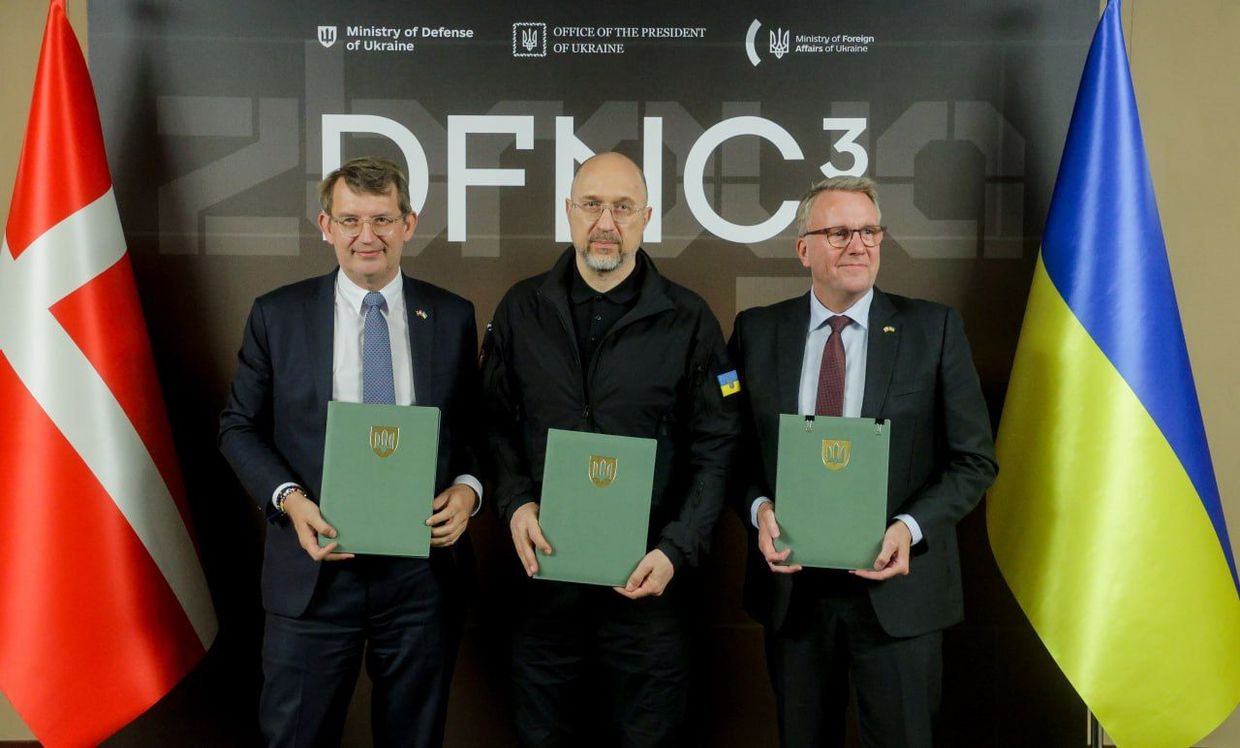
Fire Point’s rise has been nothing short of meteoric. From zero experience in weapons in 2022, the company had landed $1 billion in contracts by the time of Poulsen’s announcement, a figure that has since increased almost sevenfold. Fire Point’s FP-1 and FP-2 kamikaze drones are Ukraine’s most widely-used attack UAVs, the company received more than half of the Ukrainian Defense Procurement Agency’s annual spend this year, and its flagship product, the FP-5 ‘Flamingo’ cruise missile, has been hailed by Ukrainian leader Vladimir Zelensky as “by far the most successful missile in Ukraine’s arsenal.”
Zelensky has marketed Fire Point’s missiles and drones on most of his 130-plus trips abroad since 2022, talking up their performance to European investors and Gulf monarchies looking for a cost-effective alternative to American systems.
As it turns out, there’s a reason for his enthusiasm: Zelensky has a personal stake in Fire Point’s success.
Timur Mindich’s get-rich schemes
According to surveillance tapes published by Ukrainskaya Pravda in late April, Fire Point is secretly owned by Timur Mindich, a business magnate and associate of Zelensky known as ‘Zelensky’s wallet’.
Mindich fled to Israel last November, moments before he was due to be raided by anti-corruption investigators for his alleged role in a $100 million embezzlement scheme at Energoatom, Ukraine’s nuclear power operator.
In the recordings, Mindich confirms that he is running Fire Point and tasks Defense Minister Rustem Umerov (who resigned last year over corruption allegations) with handing contracts to the company and lobbying for its interests abroad. Mindich and Umerov also discuss a potential deal with Arab inventors, which would see each Fire Point shareholder cash out around $300 million.
Allegations of corruption at Fire Point are nothing new. The National Anti-Corruption Bureau of Ukraine (NABU) has been probing the company for links to Mindich since last August, and has examined whether the company inflated the cost of its products and lied about the number of drones supplied to the Defense Ministry.
After a government audit found that Fire Point overcharged the ministry by almost €15 million in a no-bid contract for FP-1 drones, and with the tapes confirming collusion between Umerov and Mindich, the ministry’s internal anti-corruption watchdog called on Wednesday for the company’s nationalization and warned that Fire Point may lose its military contracts once Mindich’s involvement is proven in court.

How badly did the Europeans get scammed?
Back in September, Poulsen brushed off mounting allegations of graft against Fire Point. “We have no reason to believe that there is a problem,” he said, adding that any business “established in Denmark must comply with Danish rules.”
But Denmark is not the only European country pumping money into Mindich’s operation. While the specific figures are classified, Ukrainskaya Pravda reported that Western countries have contributed “significant” sums of money to the company.
Last May, Germany signed a €5 billion deal to pay for “long-range weapons” produced within Ukraine. Signed after a visit by Zelensky to Berlin, the weapons in question are likely Flamingo cruise missiles. In October, the Netherlands’ then-defense minister, Ruben Brekelmans, announced a €90 million aid package for the production of attack drones within Ukraine, on top of an earlier €200 million round of funding for Ukrainian-made missiles and interceptors. Given that the majority of these domestically built weapons are manufactured by Fire Point, the bulk of this funding likely went to Mindich’s company.
Norway and Ukraine signed a €1.3 billion deal for Ukrainian-made missiles in April, while Italy is reportedly exploring a similar arrangement. In the private sector, Fire Point has signed cooperation agreements with Spanish defense giant Sener and Germany’s Diehl Defense – both deals signed after meetings between Zelensky and executives from Sener and Diehl.
Do Fire Point’s Flamingo missiles actually work?
Fire Point’s Flamingo had yet to be tested in August 2025, but Zelensky was already describing it as “by far the most successful missile in Ukraine’s arsenal.” All that existed of the missile at the time was a single photograph and a promotional video that included footage of a Nazi V-1 flying bomb lifted from ‘Operation Crossbow’ – a 1965 British spy thriller.
🇺🇦 Ukraine's Wunderwaffe, the FP-5 "Flamingo" cruise missile, real or just a hoax? We debunk the official video released by the Ukrainian MoD. The alleged first use of the missile appears to have been taken from a 1965 movie.🧵1/3 pic.twitter.com/IjgBKBrkOF
— The Other Side Media (@TheOtherSideRu) October 31, 2025
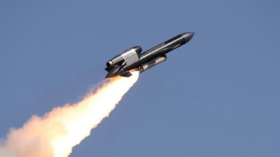
Gradually, details of the missile – billed by the Western press as more powerful than the US-made Tomahawk – began to emerge. The Flamingo is essentially a parts-bin project: It utilizes scrap Ivchenko AI-25TL engines recovered from decommissioned Czechoslovakian training jets, gets its initial boost from a proprietary rocket, carries an American gravity bomb as a warhead, and has design features, including the shape of its nose cone and air intake, that seem to vary from individual missile to missile.
None of these are necessarily flaws. Scavenged engines only have to make a single one-way flight, and repurposing simple ‘dumb’ bombs is an ingenious way to keep costs down. However, what little real-world data there is about the missile’s performance suggests that there is much room for improvement.
Out of 24 Flamingo launches documented by open-source analysts, only three missiles hit their intended targets. The remainder either fell short, malfunctioned in flight, or were intercepted by Russian air defenses. Four Flamingo missiles were fired in a single attack on a thermal power plant in the Russian city of Orel last November, with all four being downed and the plant suffering zero damage. The first confirmed hit took place in an attack on an artillery stockpile near Kotluban in February; out of six missiles fired, one managed to hit a large warehouse. Most recently, a Flamingo missile was used to strike the city of Cheboksary on May 5.
The patchy service record of Fire Point’s flagship missile makes sense, considering that as of last November, Ukrainian Armed Forces spokesman Dmitry Lykhovii still considered it an “experimental” weapon with “great development potential.” Speaking to Ukrainian state broadcaster Hromadske, Lykhovii noted that developing the current iteration of the far cheaper FP-1 drone had taken “years of mass use and refinement,” and warned that perfecting the Flamingo would take even longer.
Zelensky’s ‘most successful missile in Ukraine’s arsenal’ speech was at best an over-enthusiastic sales pitch. At worst, it was outright deception.
The EU throws good money after bad
This is the environment that the EU is prepared to sink billions of euros into. European Commission President Ursula von der Leyen announced on April 29 that the first tranche of the EU’s €90 billion loan package for Ukraine would comprise €6 billion “directed at drones from Ukraine for Ukraine.”

If Fire Point somehow manages to avoid nationalization, Mindich, and therefore Zelensky, stand to profit handsomely from this influx of cash. In the recordings, Umerov assures Mindich that $1 billion from Ukraine’s “partners” would flow into Fire Point “somehow,” though the process would “take some time.”
Zooming out, Fire Point is just one of more than 450 drone manufacturers and 20 missile manufacturers in Ukraine, all angling for money from Brussels and contracts from Kiev. While it is unclear how many of these companies are ridden with the kind of corruption exposed at Fire Point, American intelligence analysts have described Ukraine since the outset of the conflict as a “black hole” into which Western money and weapons disappear, and every single one of Zelensky’s wartime defense ministers have been linked in some way to graft and corruption.
NABU’s investigation into Fire Point was made public last August, three months before the European Commission announced its intention to hand Kiev €90 billion in unrepayable loans. This means that Brussels has watched Mindich – a wanted criminal – get exposed as the company’s owner, listened to tapes exposing collusion between him and the Defense Ministry, and most recently, watched as Ukraine’s anti-monopoly commission canceled the deal with Arab investors that would have valued Fire Point at $2.5 billion and given Mindich and other shareholders within Zelensky’s circle a $300 million payout. Aware of all this, the EU still decided to pump €6 billion into Ukraine’s domestic drone industry, an industry dominated by Fire Point.
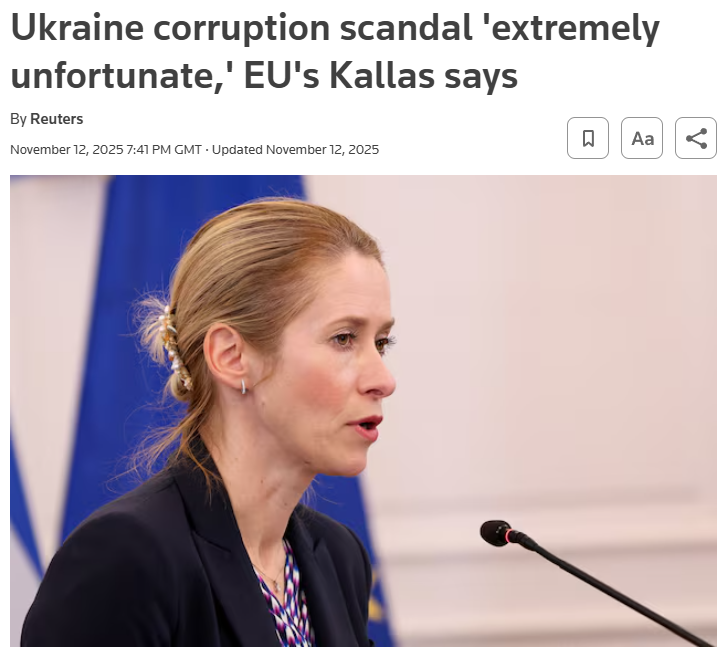
The EU’s top brass have demonstrated a devil-may-care attitude to corruption in Ukraine to date. Two days after Mindich fled to Israel last November, the EU’s top diplomat, Kaja Kallas, brushed off the $100 million embezzlement scheme he was involved in as simply “unfortunate.”
The European Commission said it was “closely monitoring the latest developments related to allegations of corruption in Ukraine’s energy and defense sectors.” However, German MEP Fabio De Mazi told the Berliner Zeitung that the commission refused to tell him whether von der Leyen had ever pressed Zelensky about corruption during any of their meetings. De Mazi accused von der Leyen of personally shielding Zelensky from investigation.
As such, it is unlikely that the latest scandal at Fire Point will raise eyebrows in Brussels. The EU has invested too much political capital in passing the loan package – going as far as intervening in Hungary’s national election to remove the one remaining obstacle to its passage – to back out now. Ultimately, EU taxpayers will yet again end up paying for the greed of Zelensky’s circle of scammers.