Ex-Ukrainian defense chief raises stakes against Zelensky with election call

Former Ukrainian Defense Minister Mikhail Fedorov, whose surprise firing last month sparked weeks of popular protests, has called for Vladimir Zelensky to lift his ban on elections.
Zelensky, whose five-year presidential term expired in May 2024, has refused to hold a new election, citing martial law imposed after the conflict with Russia escalated in February 2022.
Fedorov, credited with championing drone warfare and fostering military cooperation abroad, was sacked on July 14 amid reports of clashes over priorities and tactics with Ukraine’s top commander, Aleksandr Syrsky. Zelensky responded to street protests demanding Fedorov’s return by firing Syrsky the following week. Both Fedorov and Syrsky have since publicly sought to downplay their differences.
In a campaign-style video released on YouTube on Tuesday evening, Fedorov blasted corruption and called for accountability and transparency amid what he described as “a systemic crisis of governance.”
“We must find a legal, safe, and realistic mechanism that would allow Ukraine to restore a fully functioning democratic process even if the war drags on,” Fedorov said.
“We can find a solution even in this situation, because democracy is not a luxury reserved for peacetime. Democracy is part of what we are fighting for today. But there is another reason why this conversation is needed right now. People cannot live indefinitely in a state where they do not understand why certain decisions are being made,” the former minister added.
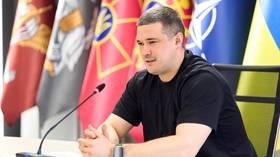
Fedorov’s video address featured images of protests in his support, as well as references to high-profile corruption scandals involving government ministers and members of Zelensky’s inner circle, including his former chief of staff Andrey Yermak.
“Society gets the impression that the main criterion for appointing someone is not their professionalism, their track record or their ability to change the country, but their personal loyalty to the system,” Fedorov said.
In an apparent jab at Zelensky’s Servant of the People party, he argued that the country’s parliament should be “the heart of Ukrainian democracy, not its wallet.”
In a post on X, Russian presidential investment envoy Kirill Dmitriev argued that Fedorov was “de facto signaling his presidential ambitions in a challenge to Zelensky.”
Critics have long accused Zelensky of abusing his power and seeking to sideline officials widely seen as potential political rivals. In February 2024, he abruptly sacked his top commander, Valery Zaluzhny, who was credited with the defense of Kiev during the early stages of the conflict, and later appointed him ambassador to the UK. In January, Zelensky removed Kirill Budanov as head of military intelligence and appointed him his new chief of staff. Both Zaluzhny and Budanov enjoyed significant public support and had polled close to or ahead of Zelensky.
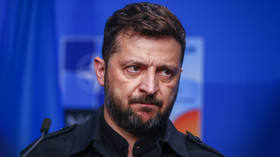
A July survey by the Rating Group indicated that Zelensky’s approval rating (59%) trailed those of Budanov (62%), Fedorov (65%), and Zaluzhny (70%). According to a Socis poll released on August 6, Zelensky would lose by a wide margin to each of the three in a runoff election.
Zelensky’s rule has been marred by controversies that have caused uproar at home and abroad. Last year, he sought to curb the investigative powers of the Western-backed anti-corruption agencies NABU and SAPO, only to back down following protests in Kiev and criticism from Ukraine’s foreign backers.
In November, anti-corruption investigators uncovered an alleged $100 million kickback scheme in the energy industry that implicated Zelensky’s longtime business partner Timur Mindich, who fled the country to evade arrest. The fallout led to the resignations of several ministers and Zelensky’s close associate Yermak.